
How can we move toward local food sovereignty through an approach based on energy efficiency?
This is the challenge addressed by the GéoGIMYC project, a research initiative funded by Carnot ISIFoR. Led by Stéphane Gibout, a faculty researcher at LaTEP (UPPA), this project aims to design agricultural greenhouses that are nearly energy-autonomous. By intelligently combining an innovative concentrated photovoltaic solar system with the thermal potential of the subsoil, GéoGIMYC optimizes energy flows to promote optimal plant growth.
This paves the way for local, short-chain production that is resilient to climate and energy crises and adaptable to diverse environments. Today, Stéphane Gibout talks to us about this project, which is particularly close to his heart.
[ISIFoR] The GIMYC1 project originally arose from a desire to optimize greenhouse energy use in order to bring food production closer to home. What is the underlying principle, and why was a geothermal “module” integrated into the current GéoGIMYC project?
 [Stéphane Gibout] As we sought to integrate renewable energy into greenhouses, we ran into a very simple problem: conventional fixed solar panels cast shadows on the crops, which can reduce tomato yields by 50 percent. Yet in the summer, greenhouses have an excess of sunlight and heat that is harmful to the plants. So we approached the problem from the opposite angle: instead of covering the greenhouse with panels, we install very lightweight, movable mirrors (stretched films) controlled by software we designed. For every 10 square meters of mirrors, we use just one square meter of concentrated photovoltaic panels. The mirrors capture and concentrate the solar flux onto this panel.
Since this panel receives an enormous amount of solar flux (up to 10 kW/m²), it must be cooled using a water circulation system. It’s a win-win situation: we maintain the panel’s efficiency and produce hot water (up to 65 °C). This is what the GIMYC project has been dedicated to.
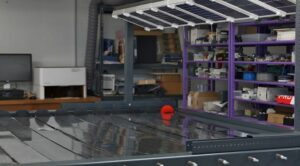
The system of movable mirrors that concentrate sunlight onto the photovoltaic panels
Building on this realization, we began to think about what we could do with this hot water by utilizing the subsoil. That’s how the GéoGIMYC project was born. While talking with a former colleague, we realized that surface geothermal energy often yields water at 15 °C, which is insufficient for use in greenhouses. Our solar system allows us to raise this temperature to 45 °C or 65 °C. Furthermore, the ground offers a fantastic opportunity: inter-seasonal storage. The enormous surplus of heat generated from April through October can be injected and trapped in the ground (if the geology allows it, such as in clay soils) to be recovered in the winter. With this combination, we’re getting very close to energy self-sufficiency.
[ISIFoR] As part of the project’s development phase, managed by SATT Aquitaine, a partnership was established very early on with Richel Group, France’s leading greenhouse manufacturer. What role did this company play in your project?
[Stéphane Gibout] When we filed our patent, SATT Aquitaine immediately reached out to manufacturers to commercialize it and, eventually, license our technology. Richel showed interest in our idea right from the start.
Their technical expertise was incredibly valuable in helping us structure our research framework. A greenhouse is a lightweight structure designed to meet precise mechanical specifications (to withstand wind, snow, etc.) and is already packed with equipment. Even though our mirrors are ultra-lightweight (less than 100 g/m²), the fact that they are tensioned places mechanical stress on the greenhouse structure. Richel challenged us on these constraints, the available space, and the placement of the opening panels. They serve as our safety net to ensure that our invention isn’t just a nice idea from the lab, but a tool that can be technically integrated into a real-world operation.
 [ISIFoR] Integrating solar panels into greenhouses isn’t entirely new. Where does the market stand today, and how does your approach stand out?
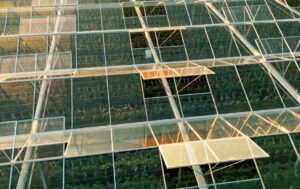
[Stéphane Gibout] In the 2010s, there was a boom in solar power in France. Energy companies jumped at the chance to use greenhouse surfaces. While these surfaces were highly efficient at generating electricity, the excessive shading made them agronomically unusable. The government eventually passed legislation to drastically limit the coverage rate of solar panels on these agricultural surfaces.
Today, everyone is searching for the ideal solution, but so far it hasn’t been found. This is where our technology can bring about a real breakthrough. Thanks to our mirrors, even though we cover a large area to capture excess solar radiation, we physically block only one-tenth as much light as solar panels would. Most importantly, the system is dynamic. In the future, with fluctuating electricity prices, we’ll be able to control the system to “block out the sun” for two hours if the feed-in tariff is attractive, without disturbing the plants, which will simply “think” a cloud has passed over. The mirror system can also be directed toward the ground at night, thereby limiting energy loss by reflecting the infrared radiation emitted by the crops during those hours.
Our concept puts agronomy back at the center: energy must serve the plant, not the other way around.
[ISIFoR] You collaborate closely with the École de Technologie Supérieure (ETS) in Montreal. What are the objectives of your upcoming work there?
[Stéphane Gibout] Historically, we’ve been working with Didier Haillot (co-inventor of the technology and former researcher at LaTEP, not to mention Cédric Arrabie, a research engineer at ENSGTI) on energy storage. This collaboration led us to install “low-tech” storage and control systems in community greenhouses in Nunavik (Canada), on the edge of the Arctic Circle. Thanks to this, isolated communities that rely on heating oil have been able to extend their growing season by 3 to 4 months and grow real local tomatoes—a true revolution.
The trip to Canada as part of the GéoGIMYC project will allow us to take two new steps forward. First, we are bringing Louis Lamarche, a researcher at ETS and a leading specialist in surface geothermal energy, onto the project team. He will provide us with his indispensable expertise to accurately model the thermal behavior of the soil during inter-seasonal storage.
Next, the major challenge we face today is integrating the energy model with the plant’s biological model. Plants continuously respond to light, humidity, and temperature. Teams in Quebec are well advanced in this complex modeling work. This trip will therefore help us refine our approaches in this area.
1. Project developed and supported by PUI SAI, SATT Aquitaine, and the SNA ExTASE program
©Images accompanying this article – screenshots from the GIMYC video produced by KapturE Productions => watch the GIMYC video